
Erik Lamela's career is a study in frustrating brilliance. You watch him dribble past three defenders with that low center of gravity, that almost insolent close control, and you think: this guy could have won a Ballon d'Or. Then he spends the next two months on the treatment table. That's the Lamela paradox—a player whose talent is undeniable but whose body and decision-making have always conspired against him.I first noticed him at River Plate。a scrawny teenager with a left foot that seemed to work like a magnet. When Roma paid €12 million for him in 2011, it felt like a steal. He was raw, sure, but the flashes were there. That solo goal against Catania—collecting the ball near the halfway line, gliding past four players, and slotting it home—remains one of the purest examples of what Lamela can do when everything clicks. But 'when everything clicks' is the operative phrase. At Roma, he showed those moments maybe once every five games. The rest of the time, he drifted. Coaches loved his work rate;teammates sometimes wondered where he'd gone.Tottenham Hotspur was supposed to be the stage where Lamela matured. Instead, it became a nine-year saga of stop-start. The rabona against Arsenal in 2014?A genuinely audacious piece of skill that won the Puskás Award. The problem was that it was also one of the few times he made headlines for the right reasons. Injuries—hip, back, hamstring, groin—piled up like a medical textbook. I remember a stretch in 2017 when Mauricio Pochettino publicly challenged him to prove his fitness. Lamela responded with a gritty performance against Liverpool, then missed the next six weeks. That cycle repeated itself so often that fans started to treat his absences as a given. It's harsh, but fair: at Spurs, Lamela was never a starter you could build around. He was a luxury, a chaos merchant off the bench。a man for a tight game's final twenty minutes.
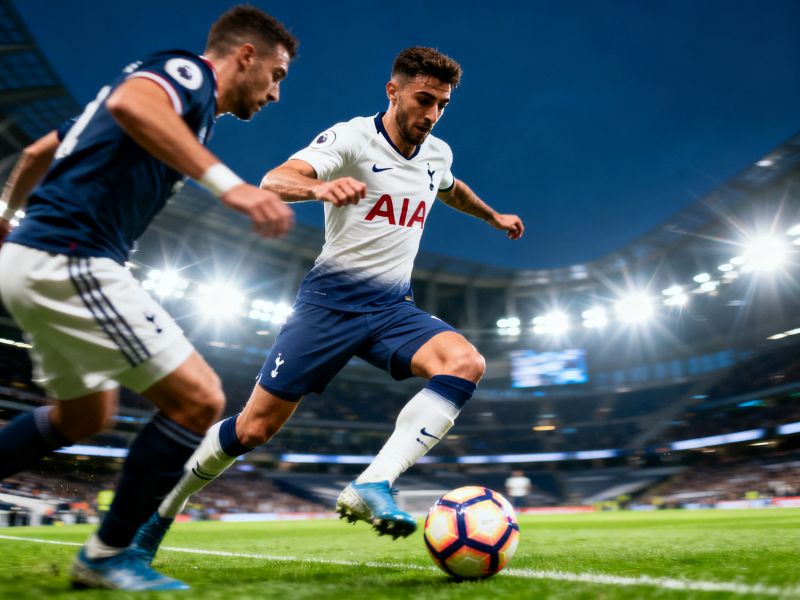
And yet。there's an argument that Lamela's real value was never in the stats. He ran. He pressed. He fouled. The dark arts were part of his game—a sly stamp here, a well-timed shove there. Opponents hated playing against him because he never let them settle. That's not nothing. In a modern game obsessed with expected assists and progressive carries, Lamela offered something older: pure, annoying persistence. When he left for Sevilla in 2021, he did so with 257 appearances and 37 goals. Not a legend, not a flop. Something messier—a cult hero with a permanent 'what if' attached.Now at 32。
Lamela is back in Spain, and the injuries have followed him. He plays in bursts, mostly as a substitute, and you still see the old spark—a quick turn, a raking pass. But the body doesn't lie. I'd argue that Lamela's legacy is less about trophies (he won the Europa League with Sevilla in 2023, though he played a bit-part role) and more about a specific kind of player who's becoming extinct: the mercurial winger who'd rather attempt a rabona than a safe cross. You can't quantify that. You just remember it.